Livestock keepers
Bluetongue
A virus disease of sheep, cattle and other ruminants, spread mainly by biting midges. How to spot it, slow its spread and report it.
At a glance
Sheep and cattle
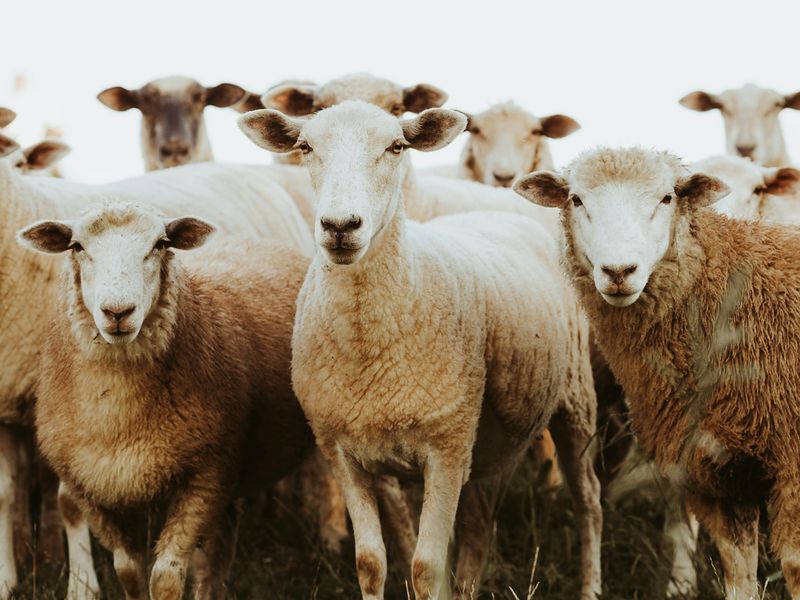
Bluetongue affects sheep, cattle, other ruminants such as deer and goats, and camelids such as llamas and alpacas.
Not a risk to people
Bluetongue does not affect people. Food questions: see the Food Standards Agency (opens in a new tab).
Vaccines are authorised
Three BTV-3 vaccines are authorised for use in the UK. A vet must prescribe them. In Great Britain you must report their use.
You must report it
Bluetongue is notifiable. If you suspect it and do not report it, you are breaking the law.
What it looks like
The signs, as GOV.UK lists them. How severe they are depends on the type of the virus.
In sheep
- ulcers or sores in the mouth and nose
- discharge from the eyes or nose and drooling from the mouth
- swelling of the lips, tongue, head and neck
- swelling of the coronary band, where the skin of the leg meets the horn of the foot
- red skin
- fever
- lameness
- breathing problems
- abortion, foetal deformities and stillbirths
- death
In cattle
- lethargy
- crusty erosions around the nostrils and muzzle
- redness of the mouth, eyes and nose
- reddening of the skin above the hoof
- nasal discharge
- reddening and erosions on the teats
- fever
- milk drop
- not eating
- abortion, foetal deformities and stillbirths
Sheep are more likely than cattle to show obvious signs. Adult cattle may be infectious for several weeks while showing little or no sign of disease. Lambs and calves infected before birth can be born small, weak, deformed or blind.
- Ulcers or sores in the mouth and nose, discharge and drooling
- Swelling of the lips, tongue, head and neck
- Fever, red skin and breathing problems
- Lameness and swelling where the leg meets the hoof
How it spreads
The routes the official guidance names. Biting midges are the most common source of infection.
Biting midges
The most common source of infection. A midge that bites an infected animal can pass the virus on for the rest of its life.
The wind
Midges can be blown long distances on the wind and bring the virus over from mainland Europe.
Moving infected animals
Movement of infected animals, within Great Britain or from outside through imports.
Germinal products and blood
Animal products such as blood, semen, ova and embryos can carry the virus.
Mother to young
An infected pregnant animal can pass the virus to her young before birth.
What keepers can do
Six steps from the GOV.UK guidance on preventing bluetongue.
Source livestock responsibly
Take care over where the animals you buy or bring in come from.
Watch for signs
Stay vigilant for signs of disease and report any suspicion at once.
House animals at dawn and dusk
Use buildings that keep out biting midges. This matters most at dawn and dusk.
Keep up hygiene and biosecurity
Maintain good hygiene and biosecurity on your premises.
Keep pets from afterbirth
Do not let farm dogs, cats or pets eat, chew or play with aborted material or afterbirth.
Ask your vet about vaccination
Three BTV-3 vaccines are authorised in the UK. A vet must prescribe them. Discuss with your vet whether it would help.
GOV.UK: preventing bluetongue (opens in a new tab). GOV.UK: BTV-3 vaccination (opens in a new tab).
Where it is now
GOV.UK counts a case as a premises where bluetongue has been confirmed.
This season
Bluetongue in Great Britain
- Risk of bluetongue virus entering by all routes
- Medium
- Risk of entering by airborne routes
- Low
From GOV.UK: bluetongue latest situation (opens in a new tab), updated 13 November 2026.
If you suspect it
Contact your vet or report it immediately if you think an animal may have bluetongue. APHA says it will contact the vet or the keeper within 4 working hours of a report.
- England
- 03000 200 301
- Wales
- 0300 303 8268
- Scotland
- 03000 600 704
- Northern Ireland
- DAERA helpline, 0300 200 7840, or your local DAERA Direct office (opens in a new tab)
Keep up with bluetongue in the UK and Ireland. The week’s numbers, the map and what to watch in one free email. Unsubscribe in one click.
Get the free Thursday emailQuestions
Can people catch bluetongue?
No. GOV.UK says bluetongue does not affect people. For questions about food, see the Food Standards Agency (opens in a new tab).
Can I vaccinate my animals?
Yes. GOV.UK lists three BTV-3 vaccines authorised for use in the UK. A vet must prescribe them. In England, Wales and Scotland you must keep a record and report each vaccination within 3 days. In Northern Ireland you need a licence from DAERA. GOV.UK: BTV-3 vaccination (opens in a new tab).
Can I move my animals?
The rules depend on where you are and where the animals are going. The zones in force today are on our UK now page. Check GOV.UK: moving animals and animal products (opens in a new tab) before you move animals.
Can dogs catch bluetongue?
Rarely. GOV.UK says bluetongue can affect dogs and other carnivores if they eat infected material, such as aborted material and afterbirth.
When are midges active?
GOV.UK says biting midges are mainly active from April to November. Weather, wind and the distance between farms affect how far and how fast they spread the virus.
References
- Bluetongue: how to spot and report it (opens in a new tab) Defra and APHA, GOV.UK, updated 21 October 2026
- Bluetongue: how to prevent it and stop it spreading (opens in a new tab) Defra and APHA, GOV.UK, updated 16 September 2024
- Bluetongue: latest situation (opens in a new tab) Defra and APHA, GOV.UK, updated 13 November 2026
- Bluetongue serotype 3 (BTV-3) vaccination (opens in a new tab) Defra and APHA, GOV.UK, updated 29 October 2026
- Bluetongue (BTV-3) confirmed on a farm in County Down (opens in a new tab) DAERA, 13 November 2026
- Counts in Ireland and Europe: DAFM, WOAH WAHIS and EU ADIS as read by this site, 15 Nov 2026